Germany’s CDU/CSU Support Drops to 2021 Levels Amid Rising Far-Right Popularity
Polling data shows CDU/CSU at 20%, while far-right AfD leads with 28%, signaling shifting dynamics for investors in German capital markets.
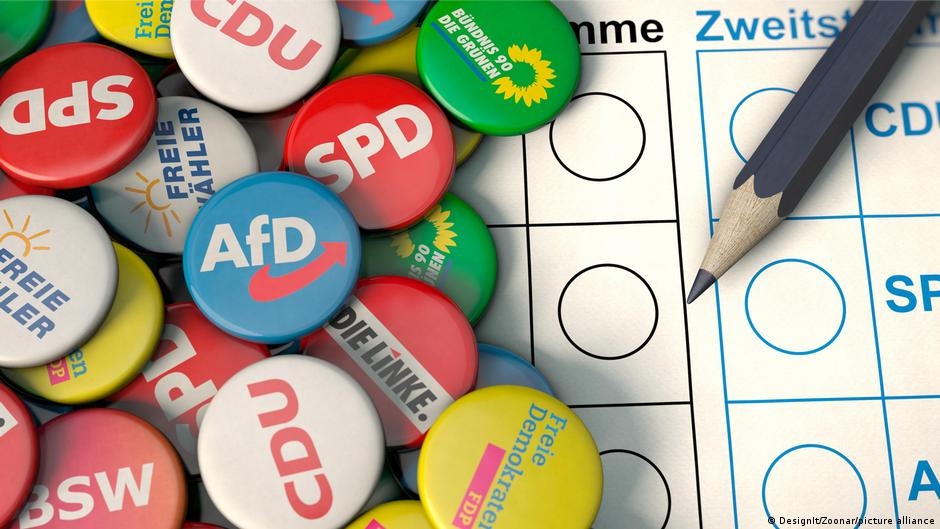
Recent polling data reveals that the support for Germany’s conservative CDU/CSU bloc has fallen to 20%, the lowest level in five years. Meanwhile, the far-right Alternative for Germany (AfD) party leads with 28%, indicating a significant shift in the political landscape that investors should watch closely.
Impact on Equities and Bonds Amid Political Uncertainty
According to a poll conducted by the INSA institute, the CDU/CSU, which currently forms part of Germany’s ruling coalition, has experienced a decline in voter backing, dropping by one percentage point since early August. The Greens maintain a steady 13% support, while the Social Democrats (SPD) and the Left party both hold 12%. The Free Democratic Party (FDP) has just crossed the parliamentary threshold with 5%, whereas the left-populist "Sarah Wagenknecht Alliance" remains at 3%, falling short of representation.
For capital markets, these shifts translate into heightened political uncertainty ahead of regional elections in September across Saxony-Anhalt, Mecklenburg-Western Pomerania, and Berlin. Notably, the AfD is poised to potentially form a state government in Saxony-Anhalt for the first time. Such developments introduce risks for market stability, particularly concerning government policy direction, regulatory environment, and fiscal priorities.
"Polling volatility reflects a weakening of traditional voter affiliations, complicating forecasts and increasing political risk premiums in investment decisions," noted market analysts.
Equity investors should anticipate potential volatility in German stocks, especially those sensitive to government policy changes and regulatory frameworks. The bond market could also see fluctuating yields as investor sentiment adjusts to political risks and the prospects of coalition negotiations that may impact fiscal discipline.
Moreover, the fragmentation of the political landscape means any new government formation could be protracted and unstable, affecting fiscal stimulus and economic reforms. Fixed income investors may demand higher spreads on German sovereign and corporate bonds, reflecting uncertainty over policy continuity.
Overall, these election polls underscore a transitional period for German politics with direct implications for capital markets. Investors are advised to monitor developments closely as shifts in political power can drive market sentiment and asset price movements.