Kyiv Strike Kills Two as Infrastructure Risk Returns to Investor Focus
Mayor Vitali Klitschko said debris hit districts across Kyiv, including near a maternity hospital, as markets weigh renewed risks to Ukraine’s energy system.
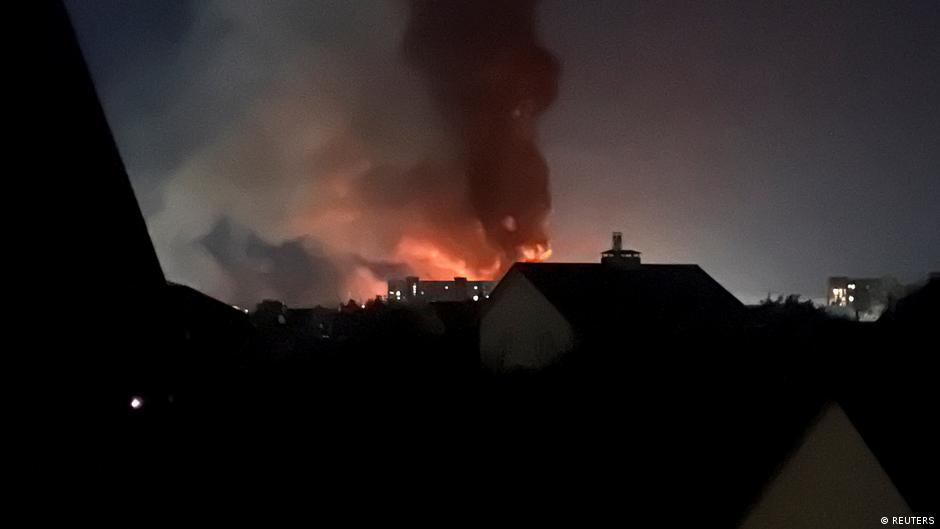
A Russian armed forces strike on Kyiv killed two people and injured six overnight into Thursday, September 24, according to the Ukrainian capital’s mayor, Vitali Klitschko, adding a fresh security shock for investors already tracking the war’s impact on infrastructure, sovereign risk and regional energy stability.
Klitschko said in a Telegram post that two of the injured were in serious condition. The reported attack affected several districts of the city, with missile fragments and debris falling on roads, residential areas, non-residential sites and administrative property. The incident immediately put attention back on Ukraine’s urban infrastructure and power system, a central concern for bondholders, equity investors with regional exposure and commodity-market participants monitoring the wider consequences of the war.
In the Podilskyi district, debris struck a parking area near a maternity hospital, Klitschko said. Cars caught fire, and windows and part of the building’s facade were damaged. Preliminary information indicated there were no casualties inside the medical facility. Klitschko added that a nearby clinical and diagnostic center was also damaged.
“According to preliminary data, there are no casualties in the medical institution,” Klitschko said, while reporting damage around the facility.
In the Darnytskyi district, a missile fragment fell on a roadway, the mayor said. In the Solomianskyi and Podilskyi districts, debris landed on non-residential development sites. In the Dniprovskyi district, fragments fell in the courtyard of a 16-story residential building and private homes, as well as on an administrative building. Areas of private estates were affected, and one house sustained destruction.
Infrastructure Exposure Moves Back Up the Risk Agenda
For capital markets, the most market-relevant detail in the initial reports was the apparent focus on energy infrastructure. Ukrainian Telegram channel Insider UA wrote that about 20 missiles of different types were launched at Kyiv over 35 minutes and that the main target of the attack was the electricity sector.
That claim, if confirmed by authorities, would reinforce a pattern investors have watched closely throughout the war: attacks on power infrastructure can affect grid reliability, municipal services, corporate operations and the broader macroeconomic backdrop. For holders of Ukrainian debt and investors exposed to European energy, logistics and reconstruction themes, each major strike is not only a humanitarian and security event but also a reminder of the operational risks embedded in the country’s recovery outlook.
The reported damage near medical and residential facilities also underscores the breadth of collateral disruption from missile debris, even when the stated target is infrastructure. Urban strikes can raise costs for local authorities, slow public services and complicate the investment case for businesses operating in or around affected cities. Investors assessing Ukraine-linked assets typically weigh these recurring risks against international financial support, reconstruction demand and the resilience of local institutions.
The incident comes as markets continue to evaluate the durability of Ukraine’s energy system ahead of colder months, the fiscal pressure created by wartime repairs and the political implications for international support. While the source reports did not provide market prices, yield moves or currency data, the attack’s emphasis on electricity infrastructure is the sort of development that can influence sentiment toward Ukrainian sovereign and corporate risk, as well as companies involved in energy equipment, grid repair and reconstruction supply chains.
Odessa Also Reports Damage
Separately, Serhiy Lysak, head of the Odessa city military administration, reported on Telegram that Russian armed forces had attacked Odessa. According to Lysak, medical and educational institutions were damaged, along with residential buildings.
“All relevant services are on site. Operational headquarters are being deployed to provide assistance to people,” Lysak wrote.
The additional report from Odessa broadens the geographic scope of the overnight damage and may further sharpen investor attention on the vulnerability of civilian infrastructure across major Ukrainian cities. Odessa remains strategically significant because of its role in trade, logistics and the Black Sea economy, making damage to the city a factor watched beyond local humanitarian concerns.
For investors today, the immediate implications are less about a single asset-price move and more about risk assessment. Renewed attacks on Kyiv and Odessa reinforce the uncertainty surrounding Ukraine’s infrastructure base, the potential need for continuing emergency repairs and the likelihood that international financing will remain central to the country’s economic stability.
Equity investors with exposure to European utilities, defense, construction materials, engineering services and regional banks may continue to monitor whether infrastructure attacks intensify or remain episodic. Bond investors will be focused on how repeated strikes affect fiscal needs, external financing requirements and the outlook for reconstruction. Energy traders, meanwhile, will watch whether damage to Ukraine’s electricity system has broader implications for regional flows, backup generation demand or cross-border support.
The reported casualty toll from Kyiv stands at two dead and six injured, according to Klitschko’s account. The mayor’s district-by-district description points to widespread debris impacts across the capital, including near a maternity hospital where the medical facility itself reported no casualties on preliminary information. The attacks on Kyiv and Odessa add another reminder that military developments continue to feed directly into the financial risk map for Ukraine and the surrounding region.