Macron Says Russian Mobilization Scenario Is Credible, Raising Europe Risk
France’s president said Moscow may call up about 300,000 people, sharpening security concerns that investors are weighing across European markets.
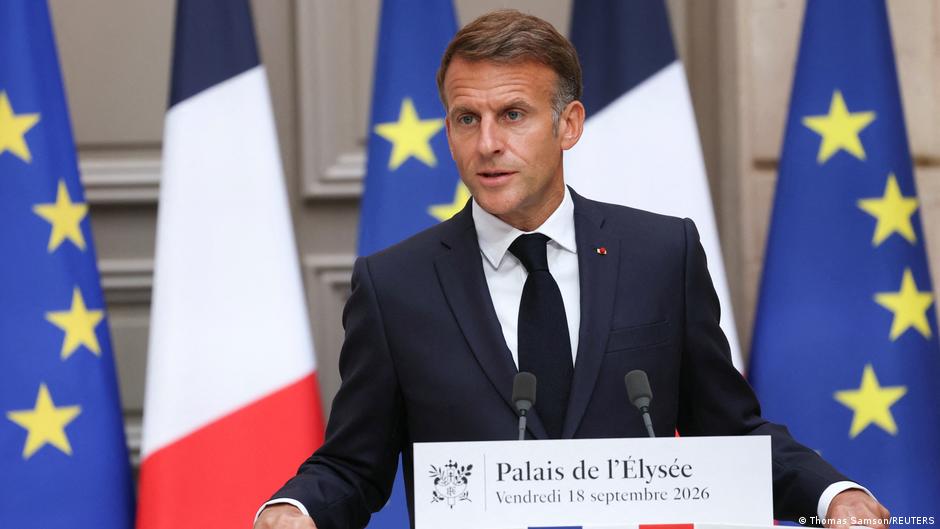
French President Emmanuel Macron said France regards as credible a scenario in which Moscow could mobilize around 300,000 people, a warning that adds a fresh geopolitical risk layer for investors already tracking Europe’s exposure to the war in Ukraine, hybrid attacks and critical infrastructure vulnerabilities.
Speaking Thursday, September 24, on TF1 and France 2, Macron said Russia had appeared to wait until after its parliamentary elections, held from September 18 to 20, before moving toward the next stage. “They waited for their elections, the elections have passed, and today it is clear that Russia will do it,” he said, while adding that it remains unclear whether any mobilization would be publicly announced or carried out covertly.
For capital markets, the significance is less about a single political statement than about the risk channel it highlights. A potential new Russian mobilization would point to a prolonged conflict scenario, reinforce concerns over European security spending, and keep investors alert to threats against infrastructure, energy systems, transportation networks and digital assets. Those risks can affect equities, credit spreads, sovereign bonds and currency positioning even before they appear in official economic data.
“This is a scenario that seems credible to us,” Macron said, referring to intelligence assessments from the United States, Europe and Ukraine.
Hybrid Threats Enter the Market Narrative
Macron also warned that “hostile actions across Europe have intensified” in recent weeks. He said he had convened representatives of political forces the previous week to alert them to the development of the threat and its consequences for France. The French president framed Europe not only as a political supporter of Ukraine but as a potential target because of that support.
According to Macron, Russia believes Europe is Ukraine’s “strategic rear” because Europeans assist Ukrainians, while Kyiv has been striking oil refineries and facilities inside Russia in an effort to force Moscow to stop the war. “And therefore Europe can become a target,” he said, citing attacks in the information sphere through the spread of falsehoods and in cyberspace.
That assessment matters to investors because hybrid threats do not need to produce immediate physical damage to influence pricing. Reports of cyberattacks, sabotage, arson, attacks on critical infrastructure or airspace violations can shift risk appetite, increase demand for defensive assets, and place a premium on companies with resilient operations. Utilities, energy infrastructure operators, defense contractors, cybersecurity providers, airlines and logistics groups are among the sectors likely to be scrutinized most closely when governments warn of rising hybrid activity.
Macron had previously said on September 18 that France was preparing a plan to protect critical infrastructure amid a growing threat of hybrid attacks from Russia. The statement fits into a broader European security discussion in which governments are reassessing vulnerabilities that sit between conventional war and ordinary criminal activity.
Equities, Bonds and Investor Positioning
The market effect of Macron’s comments depends on how investors interpret the probability and timing of the risks he described. A credible mobilization scenario could reinforce expectations that the war will remain a central macro variable for Europe. In equities, that may support continued attention to defense and cybersecurity names, while increasing sensitivity in sectors exposed to energy costs, transport disruption or cross-border infrastructure risks.
Bond markets may read the same warning through a fiscal and risk-premium lens. If European governments accelerate spending on defense, resilience and infrastructure protection, investors will weigh the budgetary impact alongside already significant demands on public finances. At the same time, heightened geopolitical uncertainty can support demand for perceived safer sovereign debt, depending on inflation expectations, central-bank policy and the scale of any market stress.
Credit investors may focus on operational resilience and refinancing risk. Companies that rely on vulnerable infrastructure, have significant energy exposure, or face possible cyber disruption may be judged differently from firms with stronger redundancy, insurance coverage and cybersecurity controls. The fact that many incidents may not be publicly disclosed, particularly cyberattacks and breaches, complicates that analysis by limiting visibility into the true scale of risk.
The source report said many incidents, especially cyberattacks and hacks, are not made public, and that the scale of Russia’s hybrid attacks is therefore significantly larger than official disclosures suggest. For markets, that means investors may be dealing with a risk set that is both material and partly opaque.
Europe’s Security Risk Premium
European intelligence services have previously accused Russia of election interference and of using migrants as an instrument of pressure on Europe. More recently, they have suspected a Russian connection in acts of sabotage, arson, attacks on critical infrastructure and airspace violations. Macron’s comments place those concerns within a broader strategic frame: Europe is being treated as part of the battlefield because of its support for Ukraine.
For investors today, the immediate issue is not whether one speech changes fundamentals overnight. It is whether Europe’s risk premium should reflect a more persistent phase of hybrid conflict and military escalation. Macron’s remarks suggest that French authorities see the risk as credible, active and relevant to domestic security planning.
That keeps geopolitical risk near the center of European market analysis. Equity investors are likely to continue separating potential beneficiaries of higher security spending from companies exposed to disruption. Bond investors will monitor whether security commitments translate into larger fiscal needs. Currency and commodity markets may remain sensitive to any sign that infrastructure threats could affect energy supply, trade flows or investor confidence.
Macron did not say whether Russia would announce mobilization publicly or proceed covertly. But his warning that Europe could become a target gives markets another reason to treat the war not as a distant conflict, but as a direct factor in European asset pricing.