Germany Sends Eurofighters to Latvia as NATO Air Risks Stay on Investors’ Radar
The short deployment underscores how Baltic security concerns remain a live geopolitical variable for European markets and defense investors.
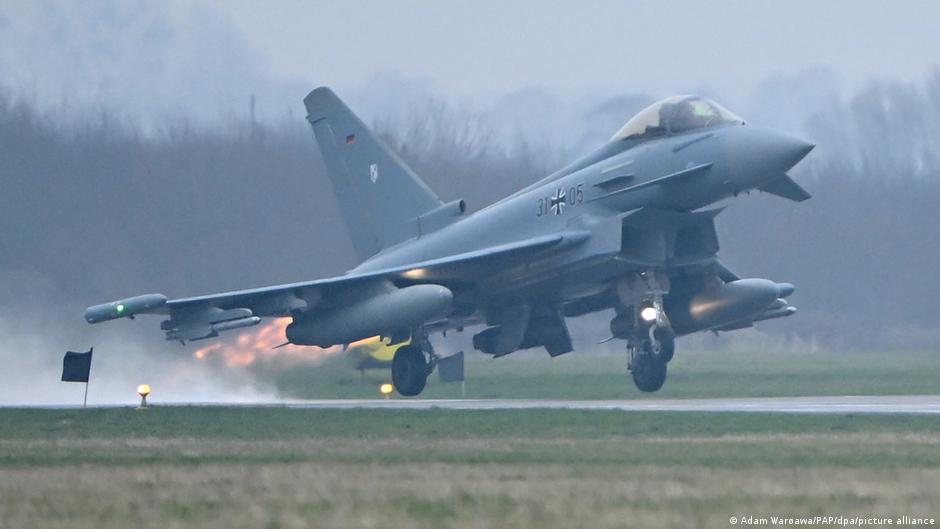
Germany has deployed four Eurofighter jets to Latvia for a little more than a week to help secure the country’s airspace during parliamentary elections on October 3, a move that keeps NATO’s eastern flank firmly in focus for investors tracking geopolitical risk in Europe.
The aircraft, from the Bundeswehr’s 74th Tactical Air Wing based at Neuburg an der Donau, were transferred to Lielvarde military airfield in central Latvia. Latvia’s Defense Ministry in Riga announced the deployment on Thursday, September 24.
The Eurofighters will support NATO’s integrated air and missile defense system while Latvia holds its parliamentary vote. Riga requested assistance from NATO allies against a backdrop of repeated airspace violations involving Baltic states, according to dpa.
For capital markets, the deployment is not a standalone shock. It is another data point in a longer-running security trend that has helped reshape investor assumptions about European defense spending, regional risk premiums and the sensitivity of Baltic assets to headlines involving Russia, NATO and Ukraine.
Security Headlines Remain Part of the European Market Tape
The immediate operational footprint is limited: four aircraft, deployed for slightly more than a week, around a defined electoral event. Yet the broader market relevance lies in what the move signals. NATO members continue to treat Baltic airspace as a high-priority security zone, and Latvia’s request for assistance shows that allied air defense capacity remains a practical concern, not just a policy theme.
Latvian Prime Minister Andris Kulbergs thanked Germany on X for its “readiness to help and close cooperation,” describing the deployment as a concrete signal of NATO solidarity and a shared commitment to protecting Latvian airspace and the security of Latvia’s population.
“This is a concrete sign of NATO solidarity and our shared commitment to protecting Latvia’s airspace and the security of the Latvian population,” Kulbergs said.
Investors have grown accustomed to security announcements from Europe’s northeast since Russia’s full-scale war against Ukraine began. Even so, such deployments can affect market psychology by reinforcing expectations that European governments will continue prioritizing defense budgets, air-defense systems, surveillance capabilities and readiness on NATO’s frontier.
That matters for equities tied to defense supply chains, aerospace production and military services. The Eurofighter itself sits at the intersection of European industrial policy and military procurement, and recurring NATO air-policing requirements help sustain attention on defense contractors and component suppliers. While this particular mission is short, the pattern behind it supports the broader investment case that European defense demand is becoming more durable.
Bonds, Risk Premiums and the Baltic Context
For bond markets, the implications are more indirect. A temporary air-policing deployment is unlikely by itself to move sovereign yields. But it fits into the cumulative security backdrop that investors weigh when pricing European periphery and frontier risk, particularly in countries geographically close to Russia and Belarus.
NATO has been guarding airspace on the alliance’s northeastern flank since Estonia, Latvia and Lithuania joined the alliance in 2004. After Russia’s full-scale invasion of Ukraine, drones have repeatedly entered the airspace of Baltic states. In August, NATO fighters shot down a drone that had violated Latvian airspace.
Those incidents are relevant to fixed-income investors because security risk can influence fiscal trajectories. Higher defense readiness can mean sustained public spending pressure, while geopolitical uncertainty may affect the risk premium demanded for regional assets. In the euro area context, those effects are usually filtered through broader European Central Bank policy, inflation expectations and general risk appetite. Still, security headlines can matter at the margin, particularly during periods of market stress.
The deployment also comes as Latvia prepares for a parliamentary election. Elections can already introduce policy uncertainty for investors. The addition of NATO air security around the vote underlines the extent to which domestic political calendars in the Baltic region can be intertwined with external security considerations.
Longer-Term NATO Air Policing Supports Defense Demand
The short mission in Latvia is not the end of Germany’s Eurofighter role in the region. From December 2026, Eurofighters are again scheduled to take on NATO airspace surveillance for a longer period from Estonian territory under the NATO Air Policing mission.
Through March 2027, five Eurofighter jets and flight crews are due to be stationed at Amari air base in northwestern Estonia. That planned deployment gives investors a clearer sense that NATO’s Baltic air-policing requirements are recurring and structured, rather than episodic responses to single incidents.
For equity markets, that continuity is important. Defense companies and suppliers are valued not only on current contracts but on the perceived persistence of government demand. Repeated air-policing missions, drone incursions and alliance deployments strengthen the case that European governments will keep allocating resources to air defense, missile defense and rapid-response capabilities.
For broader markets, the message is more cautious. The deployment does not indicate an immediate escalation by itself, and the number of aircraft is small. But it confirms that the security environment around the Baltic states remains active. Investors today are likely to read the German move as part of the same strategic backdrop that has supported defense equities while keeping geopolitical risk embedded in European asset pricing.
The market takeaway is straightforward: NATO air defense on the Baltic flank remains a standing investment variable. For investors in European equities, bonds and currencies, Latvia’s election-period request for allied support is another reminder that security risk has become a routine part of the region’s economic and financial landscape.