London's Dual Rallies on Migration and Palestine Prompt Market Caution Amid Political Tensions
Simultaneous mass protests in London raise concerns over political stability and investor sentiment in UK capital markets.
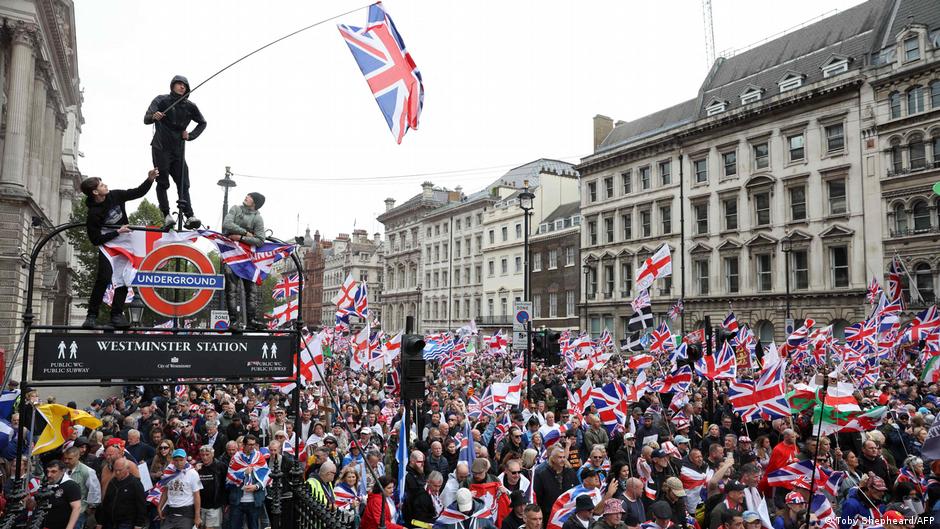
On May 16, London witnessed two large-scale demonstrations reflecting deep societal divides: an ultraright march opposing migration and a pro-Palestinian rally commemorating the 1948 Nakba. Tens of thousands participated, marking a significant moment of political expression in the UK capital. While police reported the events were largely peaceful, the demonstrations underscore tensions that may influence market dynamics.
Market Implications Amid Political and Social Unrest
Both rallies attracted considerable attention against the backdrop of the final match of the English FA Cup, drawing thousands of football fans into the city. The ultraright march, organized by Stephen Yaxley-Lennon, also known as Tommy Robinson, vocalized opposition to asylum seekers and immigration policies under Prime Minister Keir Starmer's government. The pro-Palestinian march criticized figures such as former U.S. President Donald Trump and British right-wing politician Nigel Farage, whose party recently secured local election majorities.
Market participants typically react cautiously to large-scale public demonstrations, particularly when they highlight political polarization and social unrest. Investors may interpret these events as potential risks to domestic stability, which could affect the valuation of UK equities and government bonds.
"These demonstrations reflect underlying political fractures that investors cannot ignore, as they may translate into policy uncertainty and regulatory volatility," said a market analyst.
Following the rallies, London's equity markets showed subdued trading volumes, with some defensive sectors gaining slight strength as investors hedge against risk. Meanwhile, UK government bond yields exhibited minor fluctuations, reflecting cautious demand amid concerns over social cohesion and government response.
The political criticism directed at Prime Minister Starmer, who accused rally organizers of spreading hate, may signal increased political polarization ahead of forthcoming policy decisions. Such an environment can weigh on investor confidence, affecting capital flows into British assets.
Furthermore, the involvement of ultraright groups and the potential for hate speech, despite police efforts to mitigate antisemitic slogans, add layers of reputational risk for the UK on the international stage. This can influence foreign investment sentiment and the broader perception of the UK as a stable investment destination.
Investors with exposure to UK markets should monitor developments closely, considering both the immediate market reactions and the possible long-term effects of sustained political and social divisions. Diversification and risk management strategies may be advisable in this climate.