Putin Warns Armenia of Higher Tariffs if It Exits Eurasian Economic Union
Russian president threatens tariff hikes on rail and energy supplies amid Armenia's EU rapprochement ahead of parliamentary elections.
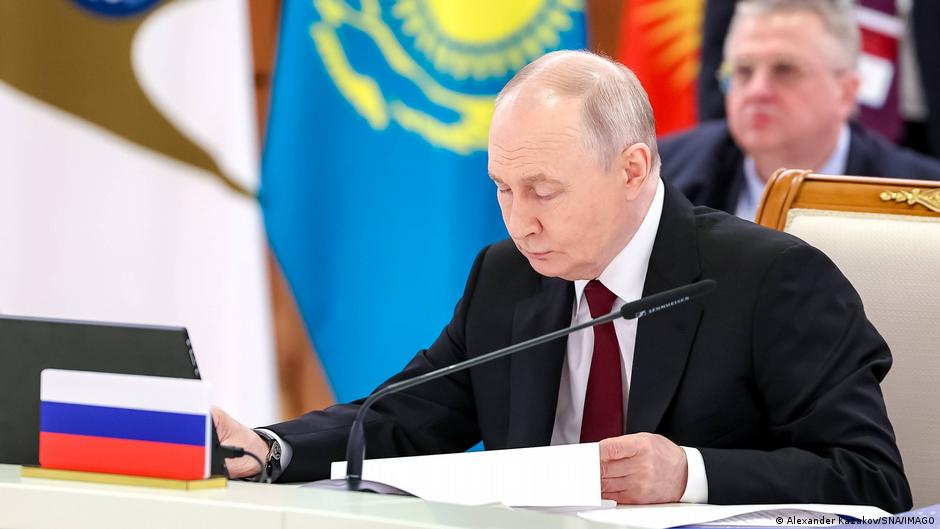
Russian President Vladimir Putin has issued a stern warning to Armenia, threatening to increase tariffs on key imports such as railway transportation and energy supplies if Yerevan withdraws from the Eurasian Economic Union (EAEU). The announcement comes amid Armenia's growing engagement with the European Union and ahead of its parliamentary elections scheduled for June 7.
Market Implications of Russia’s Economic Coercion
At a press conference following the EAEU summit in Astana on May 29, Putin emphasized the potential economic fallout for Armenia should it pivot toward European standards. "If Armenia begins adopting EU standards, we will have to cease all economic integration with them," he stated, questioning the future market routes for Armenian products like wine. "We will have to raise tariffs on railway transportation. Energy prices will have to increase," Putin warned.
Additionally, Armenian citizens working in Russia may soon be required to obtain work patents, signaling a tightening of labor mobility between the two countries. Putin drew a parallel with Ukraine, suggesting that Kyiv's attempts to join the EU marked the beginning of its crisis.
"If Armenia begins adopting EU standards, we will have to cease all economic integration with them," Putin said, highlighting the risk of tariff hikes on transportation and energy.
This escalation of economic pressure reflects Moscow’s strategy to dissuade Armenia from deepening ties with the EU, particularly at a politically sensitive time. Earlier on the same day, EAEU leaders collectively urged Armenia to hold a referendum to decide between EU accession and continued membership in the Eurasian bloc, which includes Russia, Belarus, Kazakhstan, and Kyrgyzstan.
For investors, these developments signal increased geopolitical risk in the region, particularly for equities and bonds linked to Armenian industries dependent on Russian trade channels. Any disruption in tariff regimes or supply chains could negatively impact Armenian exporters, notably in sectors like agriculture and beverage production.
Russia’s regulatory agencies have already begun imposing trade restrictions. Rosselkhoznadzor has banned imports of certain Armenian goods, including mineral water, vegetables, and brandy. Meanwhile, the Russian Energy Ministry has threatened to terminate duty-free agreements on petroleum products, natural gas, and uncut diamonds supplied to Armenia.
These moves may heighten market volatility and induce investor uncertainty in Armenian assets, while Russian companies engaged in cross-border trade may face supply and demand shocks. Financial markets should closely monitor the evolving diplomatic standoff for signs of further sanctions or trade disruptions.
Controversial Rhetoric and Propaganda References
In the same press briefing, Putin dismissed EU claims of Russia preparing for war against Europe as "nonsense and lies." He criticized media outlets reporting such allegations as "mass deception tools," invoking a phrase he attributed to Joseph Goebbels, the Third Reich’s propaganda minister: "The more incredible the lie, the sooner people will believe it."
However, experts note that the phrase more accurately originates from Adolf Hitler’s Mein Kampf (1925-1926), and Goebbels never used it in this context. This rhetorical tactic underscores the Kremlin’s continued use of historical propaganda references to discredit Western narratives.
Outlook for Investors
The intensifying Russian pressure on Armenia introduces new layers of risk into the regional capital markets. Investors holding Armenian government bonds or equities in export-driven industries should prepare for potential negative impacts arising from tariff increases and trade restrictions. Cross-border labor market tightening may also affect remittance flows and consumption patterns.
Meanwhile, investors in Russian markets should consider the geopolitical tensions with Armenia as part of broader regional instability factors influencing asset valuations. Diversification and close monitoring of political developments will be essential strategies to navigate this period of uncertainty.