Russia Allows Euro-3 Standard Fuel Until 2026 Amid Refinery Disruptions
The Russian government extends permission for Euro-3 gasoline and diesel amid fuel production declines affecting market stability.
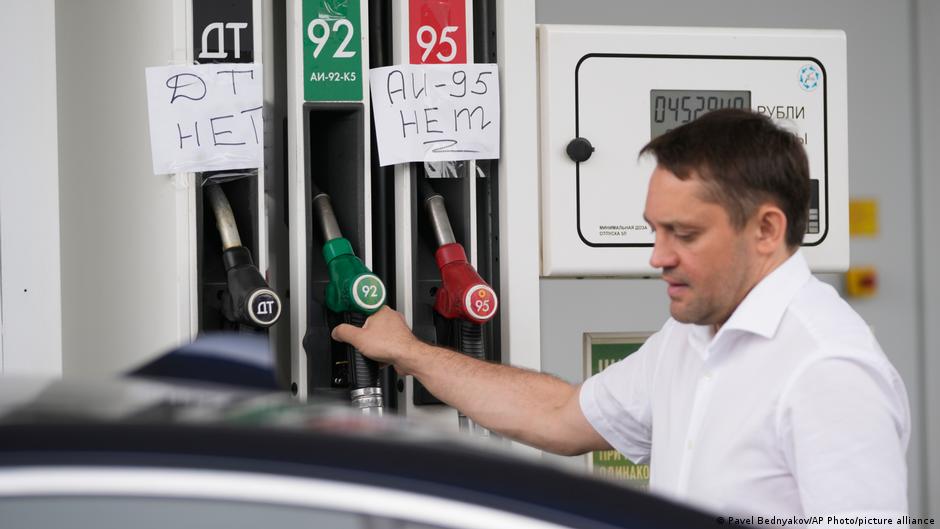
The Russian government has authorized the continued circulation of gasoline and diesel fuels meeting the outdated Euro-3 environmental standards until the end of 2026. This decision marks a significant regulatory shift, permitting fuel with higher sulfur content compared to modern standards, as the country grapples with a severe fuel production crisis.
Market Implications of Lower Fuel Standards
Signed by Prime Minister Mikhail Mishustin on July 2, the new regulation permits Russian refineries to produce gasoline containing up to 150 mg of sulfur per kilogram and diesel with up to 350 mg/kg. In comparison, the Euro-5 standard, which is the current benchmark in many markets, limits sulfur content to just 10 mg/kg, making Euro-3 levels 15 to 35 times higher.
Fuel meeting Euro-3 standards will not be marketed under the Eurasian Economic Union's (EAEU) unified product circulation mark and cannot be exported to other EAEU member states. This move is aimed at preventing destabilization in Russia's domestic energy market amid ongoing supply disruptions.
"The return to lower fuel standards enables the use of crude oils requiring less complex processing and allows refineries unable to produce higher-quality fuel to remain operational," said Dmitry Prokofiev, Communications Director at NEFT Research.
Prokofiev highlighted that while the rollback facilitates production continuity, it raises safety and environmental concerns, noting that Euro-2 and Euro-3 fuels can be unsafe for many modern vehicles.
Fuel Supply Crisis and Market Reactions
The emergency regulatory relaxation comes in response to a pronounced fuel supply crisis exacerbated by sustained attacks by Ukrainian armed forces on Russia's fuel infrastructure. Notably, Moscow's Kapotnya refinery, responsible for approximately 40% of the capital's fuel supply, was hit twice in late May and is expected to remain offline until late 2026 or early 2027.
Production data from Reuters indicates a 25% year-over-year decline in gasoline output to 85,000 tons per day as of June, against a summer demand of around 110,000 tons daily. This supply shortfall has led to official rationing measures across more than 40 Russian regions, including occupied Ukrainian territories, with disruptions reported in up to 85 administrative units.
Inventory data from Kpler demonstrates a depletion of several hundred thousand tons of gasoline in recent months. President Vladimir Putin has publicly acknowledged the deficit, underscoring the scale of the problem.
Investor Considerations in Energy and Equity Markets
For investors, these developments introduce heightened uncertainty in Russia's energy sector equities and bond markets. The sanctions environment and physical damages to refining capacity strain domestic fuel supplies, potentially impacting the revenues and credit profiles of Russian oil and gas companies. While easing fuel standards may preserve refining operations in the short term, the environmental backslide and operational risks could weigh on long-term valuations.
Furthermore, the restriction on exporting lower-grade fuels within the EAEU limits export revenues and complicates regional trade dynamics. Market participants should monitor ongoing geopolitical developments, regulatory changes, and capacity restoration timelines closely, as these factors will shape Russia's energy market recovery and investment risk profiles.