U.S. Says It Destroyed Five Iranian Oil Tankers as Hormuz Risks Rise
CENTCOM said the strikes followed ballistic missile attacks on a U.S. Navy ship, adding fresh pressure to oil markets and regional risk pricing.
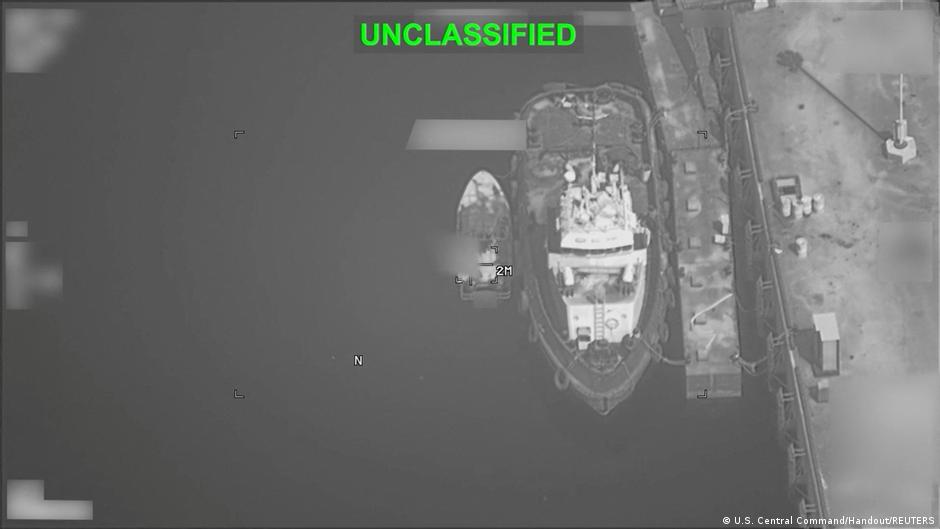
U.S. forces destroyed five Iranian oil tankers on Tuesday, September 8, after the Islamic Revolutionary Guard Corps twice attacked a U.S. Navy ship with ballistic missiles over the previous two days, according to U.S. Central Command.
The command said the U.S. vessel successfully evaded the Iranian attack attempts and continued patrol operations in regional waters. No U.S. personnel were injured, CENTCOM said in a statement posted on X.
For investors, the immediate issue is not only the loss of five vessels but the escalation pattern around the Persian Gulf and the Gulf of Oman, where shipping risks can quickly feed into energy prices, inflation expectations and demand for safe assets. The Strait of Hormuz remains central to global oil supply, and military claims over control of the waterway now sit at the center of the conflict involving the United States, Israel and Iran.
U.S. Central Command said American forces instructed crews to leave the vessels before they were struck and disabled.
CENTCOM identified the tankers destroyed in the Gulf of Oman as the IRGC-linked M/T Kaviz, M/T Charminar, M/T Horizon 1 and M/T Riesco. It said a fifth tanker, M/T Derya, was destroyed near Kharg Island in the Persian Gulf.
According to the U.S. command, Iran used the tankers as part of a multibillion-dollar “shadow” network that finances the IRGC and its regional proxies. U.S. forces also said Tehran lacks the means to protect such vessels.
Energy Risk Returns to the Center of Market Pricing
The latest strikes put oil-linked risk back in focus for equity and bond investors. A sustained escalation near Hormuz can affect markets through several channels: crude prices, transport and insurance costs, inflation expectations, central-bank policy assumptions and risk appetite for shares exposed to consumer spending or industrial margins.
Before hostilities began in late February, the Strait of Hormuz was open to shipping. It is now contested, with both Iranian and U.S. armed forces claiming control. That shift matters for investors because the waterway plays an important role in global oil shipments, making even localized military events relevant to broader market pricing.
In equities, energy producers may draw support when geopolitical risk raises expectations for tighter supply or a higher risk premium in crude. Airlines, shipping companies, chemical producers and other energy-intensive sectors can face the opposite pressure if fuel costs rise. Broader stock indexes may also be affected if investors interpret the escalation as a threat to growth, trade flows or corporate margins.
Bond markets face a more complicated signal. Higher oil prices can push inflation expectations upward, which may pressure yields. At the same time, heightened conflict risk can increase demand for U.S. Treasurys and other perceived havens. The balance between those forces depends on whether markets view the confrontation as a short disruption or the start of a more durable threat to energy supply.
The U.S. strikes also follow a recent pattern of military action after a temporary pause. CENTCOM forces destroyed three Iranian oil tankers on September 5 after the IRGC attempted to attack a U.S. aircraft carrier and a missile destroyer. Before that, U.S. forces had not struck Iran since late July.
President Donald Trump had explained the late-July halt in strikes as an effort to continue negotiations with Tehran over the future of the Strait of Hormuz, sanctions and Iran’s nuclear program. The resumption of military action signals that those talks have not removed immediate security risks from the Gulf region.
The first U.S. strike after the monthlong lull came on August 30, when American forces hit two Iranian missile launchers on Larak Island in the Strait of Hormuz. Tehran then said it carried out retaliatory attacks on U.S. targets in the United Arab Emirates. Dozens of drones attacked what Iran described as “American helicopters and personnel at Al Minhad base” in the UAE.
Investor Focus Turns to Escalation and Supply Routes
The market question now is whether the tanker strikes remain contained or become part of a broader exchange that disrupts shipping. The source article did not report oil-price moves, equity-index reactions or bond-yield changes, but the facts described by CENTCOM are directly relevant to how investors assess geopolitical risk in energy and regional assets.
Capital markets typically respond most sharply when military events threaten supply routes rather than isolated military equipment. Tankers are part of the physical infrastructure of oil trade, and the Gulf of Oman, Persian Gulf and Kharg Island are all tied to the region’s export system. That makes the destruction of named vessels more than a tactical development for traders watching commodity exposure.
At the same time, CENTCOM’s statement that crews were instructed to leave the ships before the strikes, and that no U.S. personnel were injured in the earlier attacks, may shape how investors judge the near-term risk of uncontrolled escalation. Markets tend to distinguish between actions that disable assets and those that cause mass casualties, because casualty levels can affect political pressure for wider retaliation.
Still, the cumulative sequence is significant: attempted ballistic missile attacks on a U.S. Navy ship, earlier attempted attacks on a U.S. aircraft carrier and missile destroyer, U.S. strikes on tankers, and prior strikes on Iranian missile launchers in the Strait of Hormuz. For investors, the conflict has moved from a negotiation-sensitive pause to an active cycle of military incidents across a critical oil corridor.
Portfolio managers will be watching for any indication that shipping through Hormuz is curtailed, that insurers raise war-risk premiums, or that regional retaliation expands beyond military assets. They will also monitor whether policymakers treat any oil-price response as temporary or as a renewed inflation shock.
For now, the central market implication is heightened uncertainty. The United States says it has disabled five Iranian oil tankers tied to IRGC financing after attacks on U.S. naval assets. Iran and the United States both claim control over a waterway that matters to global oil supply. That combination keeps energy risk embedded in equity valuations, bond-market inflation assumptions and investor positioning heading into the next trading sessions.