Germany Presses Ukraine to Include Its Defense Firms in Procurement
Foreign Minister Johann Wadephul linked Berlin’s continued support for Kyiv to a larger role for German industry in defense purchases.
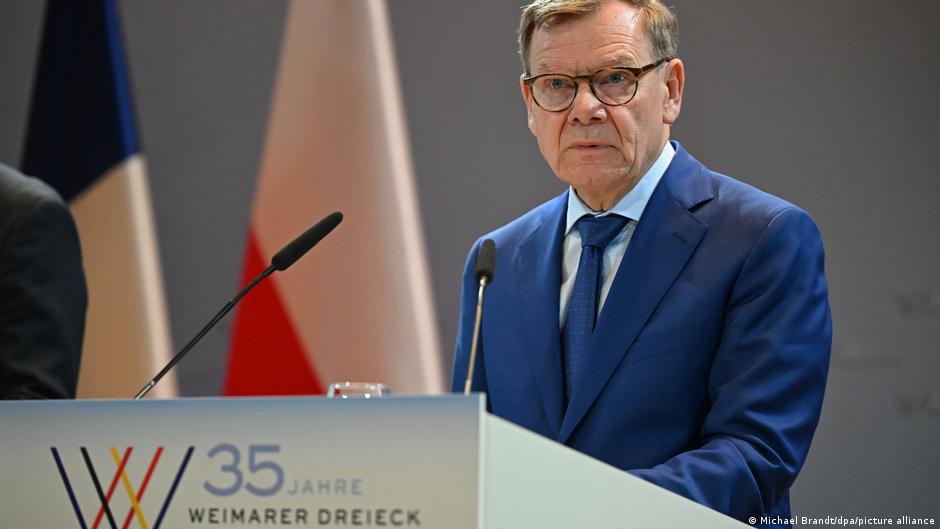
German Foreign Minister Johann Wadephul has publicly urged Kyiv to pay closer attention to Germany’s interests, sharpening the economic dimension of Berlin’s support for Ukraine and putting defense procurement at the center of a broader political and market debate.
In an interview with Bild published on Tuesday, September 8, Wadephul criticized Ukrainian President Volodymyr Zelensky and said Germany’s defense industry should benefit from the country’s backing of Kyiv. His comments matter for investors because they frame Ukraine aid not only as a geopolitical commitment, but also as an industrial policy issue with direct implications for listed defense suppliers, government budgets and European fixed-income markets.
“At the moment, we are Ukraine’s strongest supporter in terms of financial and military support,” Wadephul said, adding that “naturally, the German defense industry should benefit from this.”
Wadephul said he raised the issue directly with Zelensky during a recent visit to Kyiv. According to his account of the message, Germany remains on Ukraine’s side and continues to support it, but Berlin must also explain that policy to German taxpayers. At a minimum, he said, German defense companies need to be involved in all procurement processes.
For capital markets, the remarks highlight a key tension in European security spending: governments are increasing aid and military outlays, but domestic political support may increasingly depend on whether national industries capture part of the spending. That could shape order books, procurement rules and investor expectations across the defense sector.
Defense Stocks and Procurement Visibility
The clearest market read-through is for German and broader European defense equities. Wadephul’s message reinforces the idea that aid to Ukraine may be tied more explicitly to domestic industrial participation. If Berlin pushes for German companies to be included in procurement linked to its support packages, investors may view that as a potential source of longer-term revenue visibility for defense contractors.
The comments do not name specific companies, announce contracts or provide new procurement volumes. They also do not change the fact that Ukraine’s urgent needs, including air defense, energy support, medical equipment and protection against drones, remain operational priorities. Still, the political language is notable: Berlin is presenting industrial participation as a condition that helps sustain taxpayer backing for aid.
That framing could support market expectations that defense spending will remain structurally higher in Europe. Since Russia’s full-scale invasion of Ukraine, investors have treated European rearmament as a multi-year theme. Wadephul’s remarks add another layer by suggesting that donor governments may seek to recycle part of the fiscal cost of assistance into domestic manufacturing demand.
At the same time, investors should distinguish between political signaling and executable contracts. A requirement that German defense industry be involved in all purchases would depend on procurement structures, Ukraine’s specific military requirements, production capacity, delivery timelines and coordination with allies. The statement is therefore relevant for sentiment, but it is not in itself a confirmed revenue event.
Budget Pressure and Bond Market Context
The fixed-income angle is equally important. Germany is committing additional financial resources while facing the usual scrutiny over fiscal discipline, debt issuance and taxpayer burden. Wadephul’s argument that he must explain support for Ukraine to German taxpayers indicates that domestic politics will remain part of the funding equation.
During his August 22 visit to Kyiv, Wadephul announced an additional 60 million euros in assistance for Ukraine. Germany will also transfer another 10 million euros to a NATO fund, whose resources are used in particular for supplies of energy carriers, medical equipment and systems to protect against drones.
For bond markets, those figures are not large enough on their own to alter Germany’s fiscal profile. But they sit inside a broader pattern of European security commitments, defense modernization and Ukraine-related support. Investors in sovereign debt are watching whether such obligations remain incremental, are absorbed within existing budgets or lead to more sustained borrowing needs across Europe.
Germany’s status as a leading supporter of Ukraine also matters for the euro-area policy backdrop. If Berlin continues to expand assistance while pressing for domestic industrial involvement, it could reduce political resistance to spending by linking aid with jobs, production and industrial capacity at home. That may make security spending more durable, even as fiscal constraints remain a central question for bond investors.
Air Defense Remains a Strategic Focus
Wadephul also announced further talks with partners from various countries about supplying Ukraine with additional air defense systems. This remains one of the most market-relevant categories of military support because air defense demand is capital intensive, technologically complex and tied to long production cycles.
For equities, air defense procurement can support expectations for sustained demand across missile systems, radar, command-and-control technologies and related components. For governments, however, it also creates budgetary pressure because these systems are expensive and often require replenishment of donor-country inventories after transfers.
The inclusion of drone-protection systems in the NATO fund’s areas of support points to another durable investment theme. The war has elevated demand for counter-drone systems, electronic warfare, sensors and layered defensive capabilities. Wadephul’s remarks do not create new numerical targets for those markets, but they reinforce the direction of travel in European defense priorities.
For investors today, the practical takeaway is that German policy toward Ukraine is being framed more explicitly through a capital allocation lens. Aid remains political and strategic, but Berlin is also signaling that industrial returns matter. That could help sustain investor interest in defense names, while keeping attention on fiscal costs, procurement execution and the bond-market implications of Europe’s long security cycle.