US Signals No Sanctions Relief for Russia Before Ukraine War Ends
Treasury Secretary Scott Bessent told Russia's Anton Siluanov that Moscow should not expect softer economic pressure before the war in Ukraine is over.
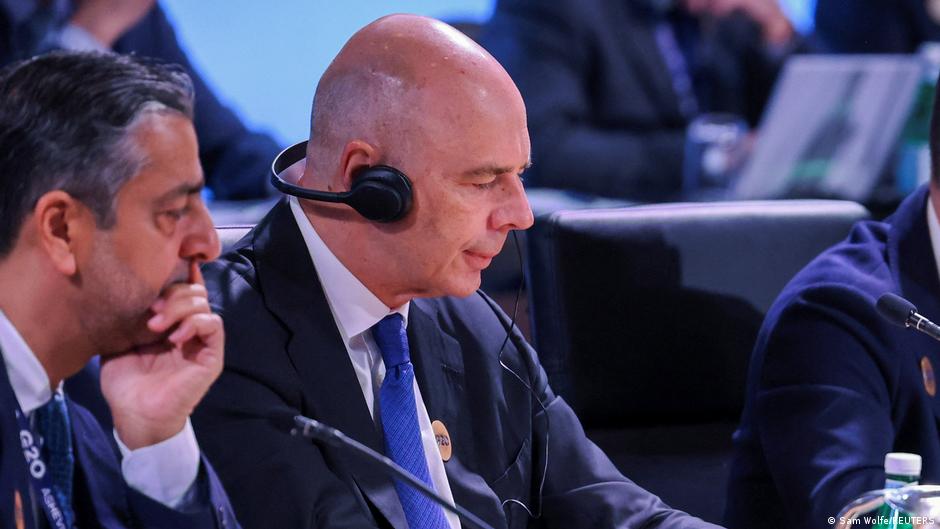
U.S. Treasury Secretary Scott Bessent told Russian Finance Minister Anton Siluanov on the sidelines of a G20 meeting that Moscow should not expect any easing of U.S. economic pressure, or agreements on other issues, before the war in Ukraine ends, according to Reuters.
For capital markets, the message is a clear one: investors looking for a near-term shift in the sanctions regime around Russia have little basis to expect a policy turn from Washington while the conflict continues. The reported warning reinforces the view that sanctions risk remains embedded across Russian-linked assets, cross-border financing channels and any trade or settlement structures exposed to U.S. restrictions.
Reuters reported in the early hours of Tuesday, September 1, citing a source familiar with the substance of the bilateral exchange, that Bessent delivered the message during talks with Siluanov at the meeting of G20 finance ministers and central bank governors in Asheville, North Carolina.
The reported stance matters beyond diplomacy. In market terms, it suggests that any investor thesis built around a gradual normalization of U.S.-Russia financial relations remains premature. That has implications for equities with Russian exposure, debt tied to sanctions-sensitive issuers and the broader pricing of geopolitical risk in emerging-market portfolios.
Sanctions Signal Keeps Risk Premium in Place
The core message from the U.S. side, as described by Reuters, was not limited to sanctions relief itself. Bessent also told Siluanov that Moscow should not expect deals on other matters before the war is over. For investors, that broadens the significance of the exchange. It points not only to continuity in punitive measures, but also to a wider freeze in financially relevant negotiations that could otherwise have been seen as incremental progress.
The meeting itself had already drawn criticism in Europe. Siluanov's participation prompted unease among European states that are currently working on tougher sanctions against Russia because of the war, the report said. That reaction is important for markets because it indicates that Western pressure is not only being maintained by Washington, but may yet be strengthened by European governments.
German Finance Minister and Vice Chancellor Lars Klingbeil described Siluanov's presence at the event as an alarming signal. In discussions with colleagues from other European countries, he also threatened to boycott the traditional group photograph if the Russian minister were included.
"One can find room for clear criticism, discuss with each other, choose clear words about this war, but a group photo would be too big a step for me at this stage."
According to Klingbeil, representatives of other European countries backed his position, and the photograph was ultimately taken without the Russian minister. He also told reporters that during the general morning meeting of participants, he told Siluanov that the war in Ukraine must end and reaffirmed Berlin's support for Kyiv.
That public European pushback adds another layer for investors. Even where diplomatic channels remain open, the political tolerance for symbolic normalization appears low. For markets, that reduces the odds that attendance at multilateral meetings should be interpreted as a precursor to policy easing.
The Russian Finance Ministry had disclosed the meeting the previous evening, on August 31, in a press release stating that Siluanov and Bessent met on the sidelines of the G20 gathering of finance chiefs and central bank governors. The statement said the ministers discussed issues of Russian-American interaction on the financial track, as well as cooperation within the Group of 20.
On the same day, August 31, U.S. broadcaster CNBC reported on its website, citing the U.S. Treasury, that Bessent had discussed U.S. President Donald Trump's peace plan for Ukraine with Siluanov in Asheville.
For investors, the coexistence of diplomatic contact and a hard sanctions message is the key takeaway. Dialogue is continuing, but Reuters' account indicates that the U.S. position remains firmly conditioned on the end of the war. In practical terms, that means capital-market participants are still operating in an environment where geopolitical headlines can affect sentiment, but where a durable re-rating based on sanctions relief remains out of reach.
That matters for portfolio positioning today. Any company, fund or creditor exposed directly or indirectly to Russia must continue to account for the persistence of restrictions, compliance burdens and headline volatility. It also matters for bond investors and currency watchers assessing whether geopolitical de-escalation could improve broader risk appetite across the region. Based on the message attributed to Bessent, Washington is signaling continuity, not détente.
With European governments simultaneously pushing for tighter sanctions, the near-term direction of policy risk appears skewed toward endurance rather than rollback. For markets, that is not a dramatic new regime, but it is a consequential reaffirmation: sanctions remain a central part of the Western policy framework, and investors should price Russian-related exposure accordingly until the war's end changes the political calculus.