Army Secretary Driscoll Resigns After Clash With Hegseth, Investors Watch Defense
Daniel Driscoll is expected to leave the Pentagon within days after months of disagreements over military policy, raising fresh questions for defense investors.
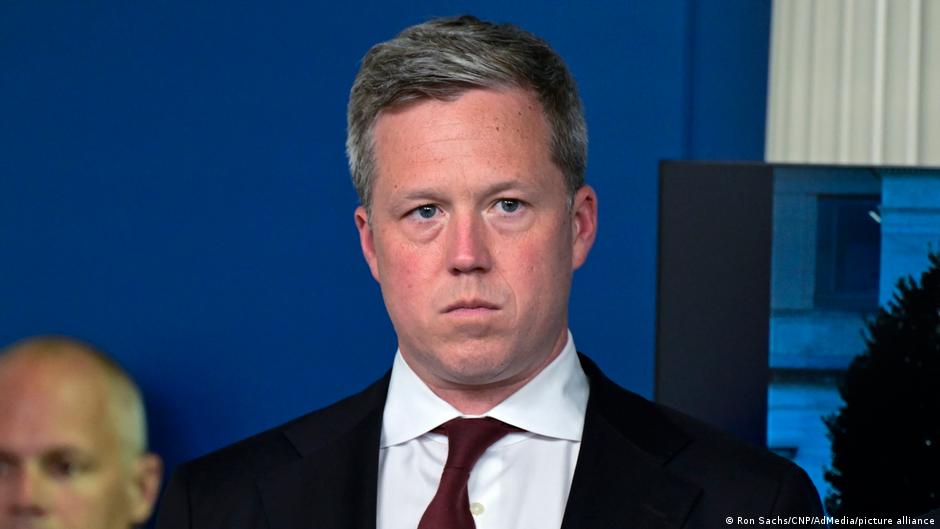
U.S. Army Secretary Daniel Driscoll has asked President Donald Trump to accept his resignation after months of disagreements with Defense Secretary Pete Hegseth over the direction of the armed forces and the dismissal of several officers, according to reports published by The Wall Street Journal and later carried by Reuters and AP.
NBC News, citing sources, reported that the White House has accepted Driscoll’s resignation. The Wall Street Journal said he is expected to leave the Pentagon within days, marking another senior-level shake-up in the U.S. defense establishment during Trump’s second presidential term.
For capital markets, the departure is less about immediate balance-sheet impact than about policy clarity. Investors in defense equities, suppliers and related industrial names tend to watch leadership continuity inside the Pentagon closely, especially when changes involve disagreements over force development, procurement priorities and senior officer turnover. Driscoll had been associated with a more flexible approach to Army modernization and with efforts to buy lower-cost weapons, while also criticizing major manufacturers, according to Reuters.
That record matters for investors because procurement philosophy can shape the competitive landscape across the defense sector. A leadership change at the top of the Army may not alter contracts overnight, but it can influence which programs gain momentum, how aggressively costs are challenged and whether established contractors face more scrutiny.
Pentagon turnover adds policy uncertainty
Driscoll’s resignation comes after weeks of speculation. The Wall Street Journal had reported on August 21 that the Army secretary was planning to step down at the end of the year because of his conflict with Hegseth. Reuters said at the time that his departure would leave the Army without a Senate-confirmed leader while the United States seeks to end the war against Iran, which it said had begun together with Israel nearly six months earlier.
Seen through a markets lens, that broader geopolitical backdrop increases the importance of any change in Pentagon leadership. Defense stocks often trade not only on current orders, but also on investor expectations around future procurement, readiness spending and operational urgency. When a senior official leaves amid disputes over military strategy and officer dismissals, the immediate effect can be to raise uncertainty over how policy will be executed across the Army and the wider Defense Department.
"Secretary Driscoll effectively advanced President Trump’s ‘Make America Strong Again’ agenda in the Department of the Army, demonstrating outstanding leadership during historic military operations and returning priority to readiness and weapons lethality, while helping negotiations between Russia and Ukraine, and in many other areas," White House deputy press secretary Anna Kelly said in a statement cited by The Wall Street Journal and AP.
The White House statement projects continuity and seeks to frame the resignation as occurring after successful execution of the president’s agenda. Even so, investors are likely to focus on the contradiction between that praise and the underlying reports of months of internal conflict with the Pentagon chief. In market terms, that leaves an open question: whether Driscoll’s exit signals tighter policy alignment inside the administration or deeper instability in defense decision-making.
Reuters has described the resignation as another step in a wider reshaping of leadership at all levels of the Pentagon during Trump’s second term. In that context, the news agency pointed to the April dismissal of Army Chief of Staff Randy George and several other senior military officials. For investors, repeated turnover can become a material issue when it affects procurement cadence, strategic messaging or confidence in the chain of command responsible for overseeing spending priorities.
Driscoll’s personal and political profile also adds to the significance of the move. He is a friend and former classmate of Vice President J.D. Vance. In November 2025, he was appointed Trump’s new special envoy for Ukraine, replacing Keith Kellogg. He had served as Army secretary since February 2025.
Those overlapping roles have tied Driscoll not only to military administration, but also to foreign-policy questions that markets monitor for implications across defense, energy and sovereign debt. While the source reports do not describe an immediate market reaction, investors today are likely to read the resignation as part of a broader pattern of strategic and personnel volatility inside the administration’s national security apparatus.
Bond investors may view the development less through the prism of any single official and more through what it signals about policy coherence at a time of active military and diplomatic strain. Equity investors, by contrast, may focus more narrowly on whether a replacement would accelerate traditional big-ticket procurement, preserve Driscoll’s cost-sensitive posture or sharpen the administration’s emphasis on readiness and weapons lethality.
For now, the central fact remains that a Senate-confirmed Army leader is leaving after a prolonged clash with the defense secretary. Until a successor is named and the Pentagon’s procurement and command priorities become clearer, the resignation is likely to reinforce a familiar market theme around Washington defense policy: leadership change can matter almost as much as headline spending when investors are trying to judge which companies, programs and strategies are positioned to benefit.