Drone Strike on Russia’s Yamal Gas Region Raises Energy Market Risk
The reported attack on a fuel and energy facility in Novy Urengoy brings a key Russian gas hub into sharper focus for investors.
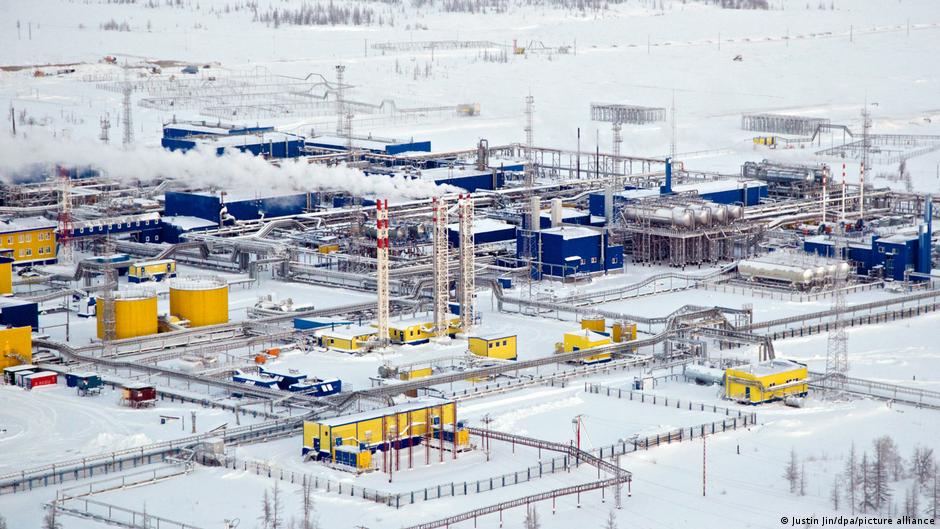
Ukrainian drones have attacked Russia’s Yamalo-Nenets Autonomous District for the first time, according to regional officials, extending the geography of the war to one of the most important natural gas-producing regions in the country. For capital markets, the incident adds a fresh risk point around Russian energy infrastructure at a time when investors continue to price geopolitical disruptions across commodities, equities and sovereign debt.
Dmitry Artyukhov, the governor of the region, said on Wednesday, September 9, that the attack targeted the Yamalo-Nenets Autonomous District and led to a fire at an industrial facility in Novy Urengoy. Official data cited by the regional authorities said there were no deaths or injuries. Artyukhov said the attack had been repelled, but that debris from unmanned aerial vehicles fell on the site of an enterprise and caused a blaze. The scale and nature of the damage, he said, were still being assessed.
The Yamalo-Nenets Autonomous District is central to Russia’s gas sector. The region accounts for an estimated 80% of Russian natural gas production, making any incident there relevant beyond the immediate military context. While the reported fire has not been described by officials as causing an interruption to production or exports, investors are likely to treat the attack as a signal that assets previously seen as geographically distant from the front line may now face higher operational risk.
Energy Infrastructure Risk Moves North
Artem Zhoga, the Russian presidential envoy to the Urals Federal District, said the target of the attack was a fuel and energy complex facility in Yamal. According to him, personnel at the enterprise had been evacuated in advance. Russian authorities did not specify which company or facility was hit.
Russian officials said the attack was repelled, but debris from the drones caused a fire at an industrial enterprise in Novy Urengoy.
Several media outlets and analytical projects that track strikes on Russian territory reported that the target may have been the Novy Urengoy condensate preparation plant, which is part of Gazprom’s gas infrastructure. The enterprise is regarded as one of the key facilities for processing gas condensate in the region. The plant processes condensate from the Urengoy, Yamburg and other fields in Yamal, and its design capacity is estimated at about 19.5 million tons of feedstock a year.
For equity investors, the main issue is not only whether a single facility sustained material damage, but whether the strike changes the perceived vulnerability of Russia’s upstream and midstream energy chain. Gazprom-linked infrastructure has long been embedded in global assessments of Russian commodity supply, even after sanctions and the restructuring of European energy flows. A confirmed strike on a key processing asset would be watched for any effect on condensate handling, field logistics and broader confidence in the reliability of remote energy installations.
Novy Urengoy is located roughly 2,800 kilometers in a straight line from the Russian-Ukrainian border. If information that the drones were launched from Ukrainian territory is confirmed, the incident could represent the longest known Ukrainian Armed Forces strike on Russian territory since the start of the full-scale war. That distance is important for markets because it suggests a wider potential threat radius for infrastructure, even where assets are located deep inside Russia.
What Investors Will Watch Next
In commodities, the first market question is whether the incident has any practical effect on flows, processing volumes or maintenance schedules. The source information does not state that output was halted, and officials have said the damage assessment is ongoing. Without confirmation of production losses, immediate pricing implications remain uncertain. Even so, energy traders may attach a higher risk premium to Russian gas and condensate infrastructure if further details point to meaningful damage or if similar attacks follow.
For bond markets, the incident adds to the geopolitical risk backdrop that already affects Russian credit, energy-linked issuers and the broader emerging-market risk complex. Investors exposed to companies with Russian energy ties, commodity-sensitive currencies, or European energy costs may monitor whether the event contributes to volatility in gas benchmarks or to renewed concern over supply security. The core issue is the widening of the conflict’s operational map rather than a confirmed change in supply balances.
Equity markets may respond most directly through energy producers, infrastructure operators, insurers, and companies sensitive to European gas prices. The event could also reinforce investor scrutiny of security spending and asset resilience among firms operating critical infrastructure in regions exposed to long-range drone warfare. Because Russian officials have not named the enterprise involved, market participants have limited information with which to assess direct corporate exposure.
The attack also highlights the distinction between physical damage and market signaling. A fire with no casualties and unconfirmed operational disruption may have limited immediate financial consequences. But a first reported drone attack on Yamal carries symbolic and strategic weight because of the region’s role in Russian natural gas production. For investors today, that makes the next official disclosures on damage, facility identity and operational continuity more important than the initial announcement alone.
Until those details are clarified, the market relevance of the incident lies in the expansion of infrastructure risk. Yamal has been one of the pillars of Russia’s gas production system, and Novy Urengoy is tied to major fields including Urengoy and Yamburg. The reported strike does not, by itself, establish a supply shock. It does, however, give investors a new data point in assessing how far the war can reach into Russia’s energy base and how that reach may be priced across commodities, equities and debt.