Russian Strikes on Sumy and Mykolaiv Add Risk to Ukraine Market Outlook
Attacks that killed civilians and damaged port infrastructure keep geopolitical risk high for investors tracking Ukraine-linked assets.
Russian strikes on the Ukrainian cities of Sumy and Mykolaiv have added a fresh layer of geopolitical risk for investors already watching the war’s effect on regional infrastructure, trade routes and sovereign risk. The latest attacks killed civilians, wounded dozens and damaged facilities tied to logistics and port activity, according to regional officials and Ukraine’s emergency service.
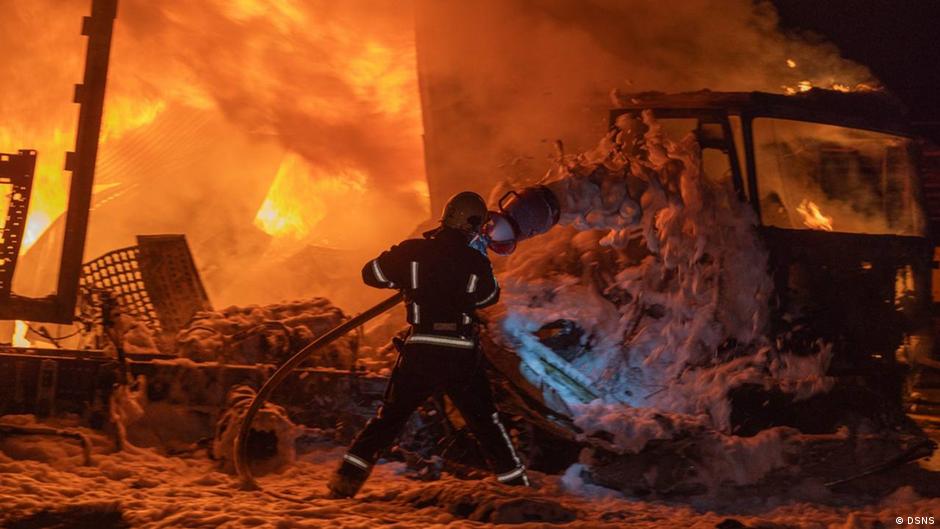
Russian forces struck a parking area near the Manufaktura shopping center in Sumy on the evening of Wednesday, September 9. Oleg Grigorov, head of the local regional military administration, said two young people were killed: a 21-year-old man and a 21-year-old woman. Preliminary information indicated that about 20 other people were injured.
Among the wounded, two men and one woman were reported to be in serious condition. Another Sumy resident was described as being in extremely serious condition. Teenagers were also among the injured. Rescue workers and municipal services were operating at the site after the strike, while regional authorities warned that the threat of further attacks remained in place.
Regional officials said the threat of repeated attacks in Sumy region remained in effect after the strike near the shopping center.
Infrastructure Damage Keeps Risk Premium Elevated
For capital markets, the significance of the attacks lies not only in the immediate human toll but also in the continued pressure on Ukraine’s civilian, commercial and logistics infrastructure. The Russian army has also continued striking Mykolaiv, a southern city closely linked to port and transport networks. Regional officials said attacks throughout September 9 damaged port infrastructure, killed two people and injured at least 12.
Among the injured in Mykolaiv was a one-year-old child, according to Georgiy Reshetilov, head of the Mykolaiv regional military administration. Ukraine’s State Emergency Service said some Russian strikes hit warehouse premises where vegetables were stored, as well as a post office branch.
The damage to port infrastructure is directly relevant for investors assessing Ukraine’s capacity to sustain exports, domestic distribution and reconstruction planning. Even when individual incidents do not immediately change macroeconomic forecasts, repeated attacks on ports, warehouses, postal facilities and residential areas tend to reinforce a higher risk premium around Ukrainian assets and companies with operational exposure to the country.
For fixed-income investors, the attacks underscore the continuing security burden that frames Ukraine’s sovereign credit story. Bondholders remain focused on external financing, fiscal capacity, infrastructure resilience and the durability of export channels. Strikes on port and civilian infrastructure can affect assumptions about logistics costs, insurance, repair needs and the pace at which economic activity can normalize.
Equity investors with exposure to regional agriculture, shipping, logistics, infrastructure, energy services and reconstruction themes may also read the latest incidents as a reminder that operational disruptions remain persistent. The report that vegetables were stored in some of the warehouse premises hit in Mykolaiv connects the security situation to food supply chains, storage capacity and regional distribution systems. The strike on a post office branch points to pressure on civilian service networks as well.
Markets Watch Repeated Attacks, Not Single Headlines
The overnight period leading into September 9 had already seen a large-scale Russian attack on the Mykolaiv region. Authorities said drones and ballistic missiles damaged port and civilian infrastructure, as well as residential buildings. At that stage, officials reported one woman killed and four people injured.
The sequence matters for markets because it signals sustained pressure rather than an isolated event. For traders and portfolio managers, the effect of such reports is often cumulative: each additional attack on infrastructure can influence perceptions of near-term volatility, reconstruction costs and the level of external support needed to stabilize the economy.
In equities, the immediate market channel is indirect unless a listed company has specific exposure to the affected assets. But broader risk sentiment can still be affected through regional emerging-market positioning, transport and commodity-linked sectors, and expectations for Ukraine’s recovery trajectory. Investors may also watch whether continuing attacks affect shipping confidence, insurance pricing or the ability of businesses to maintain operations in southern and northeastern regions.
In bonds, the impact is tied to assumptions about fiscal pressure and security risk. Damage to ports and civilian infrastructure can deepen the need for public spending on repairs, emergency response and protection of critical assets. It can also shape the views of multilateral lenders and private creditors assessing the path from wartime financing to longer-term recovery.
Currency and commodity markets may also treat the attacks as part of the broader war-risk backdrop. The source report does not provide market prices or trading data, but the facts it describes are the type of developments investors track when assessing Black Sea logistics, agricultural supply chains and the stability of export infrastructure. Mykolaiv’s port-related damage is especially relevant in that context.
The latest reports therefore leave investors with the same core risk equation: Ukraine’s economic assets continue to operate under the threat of repeated strikes, while the human cost remains severe. For today’s market outlook, the attacks in Sumy and Mykolaiv reinforce caution around Ukraine-linked exposure and keep attention fixed on infrastructure resilience, external financing and the security of transport networks.