Italy and Germany Urge Restraint After Israel Stops Gaza Aid Flotilla, Markets React
European calls for adherence to international law follow Israel’s interception of aid ships, impacting investor sentiment amid Middle East tensions.
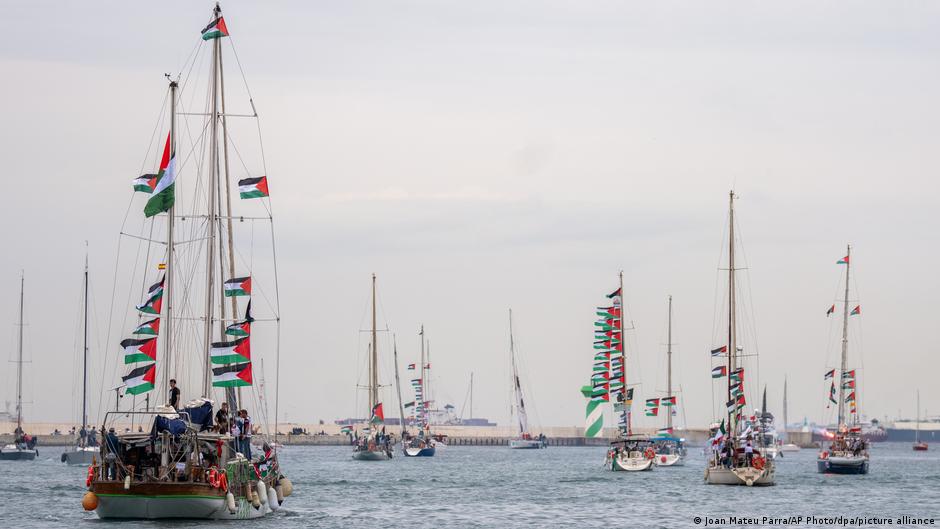
Italy and Germany have jointly expressed serious concerns over Israel’s recent interception of a humanitarian aid flotilla bound for the Gaza Strip, emphasizing the need for strict compliance with international law and caution against irresponsible actions. This development has drawn attention from global capital markets, which are closely monitoring geopolitical tensions in the Middle East for their potential impact on equities and bonds.
International Response and Market Implications
On April 30, the German Foreign Ministry released a joint statement with Italy urging all parties to respect existing international law following the Israeli navy’s halt of over 20 vessels off the coast of Crete. The flotilla, organized by the Global Sumud Flotilla group, aimed to deliver humanitarian aid to Gaza, a territory under a blockade enforced by Israel and Egypt since 2007.
"We call for the absolute observance of current international law and the rejection of irresponsible actions," the statement declared.
The incident has revived concerns about stability in the region, which in turn affects investor confidence. Equity markets sensitive to geopolitical risk, particularly in Europe and the Middle East, are likely to exhibit increased volatility. Bond yields for countries perceived as safe havens could fluctuate as investors reassess risk premiums amid escalating tensions.
Marine tracking data confirmed that some of the flotilla's vessels continued their journey within Greek territorial waters near Crete after the Israeli navy's intervention. However, the organizers have yet to announce their next steps publicly, adding uncertainty to the situation.
The flotilla, reportedly the largest ever attempting to reach Gaza, departed from a Sicilian port on April 26, carrying activists and aid supplies. Its stated mission extends beyond delivering humanitarian aid to advocating for the establishment of a permanent humanitarian corridor into Gaza, which could influence future international shipping and trade routes in the region.
Context of the Gaza Blockade and Previous Developments
The Israeli naval blockade, supported by Egypt, has restricted access to Gaza since 2007, impacting the flow of goods and aid. Pro-Palestinian activists have repeatedly challenged this blockade, leading to sporadic confrontations.
Notably, in August 2025, Swedish environmental activist Greta Thunberg confirmed her participation in a similar flotilla effort organized by Global Sumud Flotilla, highlighting the international dimension of humanitarian and political activism linked to the region.
In October 2025, a US-led ceasefire plan brokered under former President Donald Trump’s administration resulted in temporary calm and prisoner exchanges between Israel and Hamas. The United States, Turkey, Qatar, and Egypt served as guarantors of the agreement. However, ongoing political complexities continue to foster uncertainty.
Most recently, in mid-January, the White House announced the initiation of a second phase of the Trump administration’s peace plan, involving the establishment of a National Committee to govern Gaza temporarily until the Palestinian National Authority assumes full control. These political maneuvers and fluctuating security conditions remain key factors influencing investor assessments of risk in the region.
Market participants are advised to monitor developments closely, as any escalation could have broader implications for energy markets, global supply chains, and regional investment climates. The delicate balance between diplomatic efforts and on-the-ground realities continues to shape the capital markets’ response to Middle East events.