Russian Strikes Hit Ukrainian Logistics, Housing and Power Assets
Attacks on Odesa, Kyiv region and Mykolaiv damaged delivery, warehouse, residential and energy infrastructure, with two people reported injured.
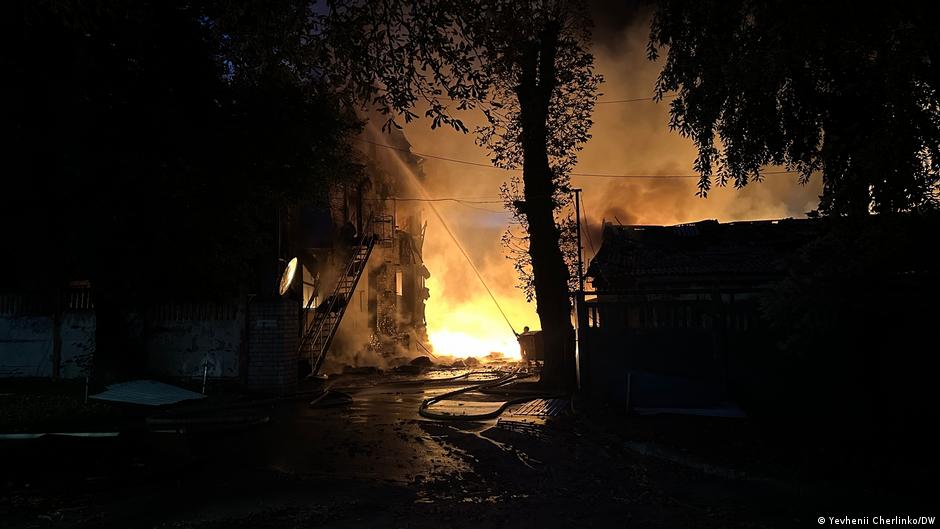
Russian forces attacked parts of Ukraine on the evening of September 12 and overnight into September 13, striking Kyiv and Odesa regions as well as the city of Mykolaiv, according to local authorities. For investors following the war’s day-to-day impact on Ukraine’s economy, the latest reports point to continued pressure on logistics, warehousing, housing and power infrastructure rather than a single, clearly measurable market event.
The reported damage was spread across several economically important categories. In Odesa region, a drone attack hit a branch of Nova Poshta, Ukraine’s major private delivery operator, injuring two people. In Kyiv region, warehouse facilities were damaged and a fire broke out in Boryspil district, while a warehouse and a private house were damaged in Brovary district. In Mykolaiv, an evening strike on energy infrastructure left several districts of the regional center partially without electricity.
For capital markets, such incidents matter less as isolated headlines and more as cumulative signals. Repeated attacks on logistics sites, storage facilities and power networks can raise operating risks for companies with exposure to Ukrainian supply chains, reconstruction contracts, energy distribution, insurance, agribusiness, metals, and transport. They can also shape investor perceptions of country risk, even when local securities markets or global assets do not immediately register a discrete price move.
Logistics and Storage Remain in Focus
In Odesa region, the evening drone attack on the Nova Poshta branch injured two people, regional military administration head Oleh Kiper and representatives of Ukraine’s State Emergency Service said. Kiper reported that the building’s facade, glazing and a cargo vehicle were damaged.
“The facade of the building, glazing and a cargo vehicle were damaged,” Kiper said.
Nova Poshta is central to Ukraine’s domestic parcel and freight network, making any strike on its facilities relevant to investors looking at the resilience of consumer distribution, small-business trade, and last-mile logistics in a wartime economy. The source report does not provide financial data, operational downtime, or the scale of losses from the attack, so any assessment of earnings impact would be premature. Still, the incident underlines why logistics infrastructure remains a key operational risk area.
Kyiv region also reported damage to warehouse premises. According to the Kyiv regional military administration, strikes in Boryspil district on the evening of September 12 damaged storage facilities and caused a fire. In Brovary district, a warehouse and a private home were damaged. No information about deaths or injuries was received.
Warehouses near Kyiv are important for distribution networks, retail supply, e-commerce, construction materials, food logistics and humanitarian flows. For bondholders, equity investors and lenders, repeated damage to storage assets can affect insurance assumptions, working-capital cycles and the cost of maintaining redundancy in supply chains. The reported incidents do not provide enough detail to quantify losses, but they fit a broader pattern of wartime risk to physical assets that investors must price qualitatively.
Power Risks Add to Investor Concerns
In Mykolaiv, regional military administration head Heorhii Reshetilov said an evening attack on energy infrastructure left several districts of the regional center partially without power. He wrote on Telegram that energy workers would begin restoring electricity as soon as the security situation allowed work to start. After that, he reported an all-clear, followed by the renewal of an air alert.
“As soon as the security situation allows work to begin, energy workers will start restoring electricity supply,” the post said.
Energy infrastructure is one of the most consequential areas for investors because power supply affects industrial output, household consumption, public services and business continuity. Partial blackouts can disrupt production schedules, cold chains, communications and transport services. They can also influence expectations for emergency spending, grid repairs and future reconstruction needs.
For fixed-income investors, power infrastructure damage can reinforce concerns about fiscal pressure and external financing requirements. For equity investors, it can affect assumptions about companies’ ability to operate facilities, move goods and manage energy costs. For currency and macro investors, damage to infrastructure may feed into broader views on Ukraine’s balance of risks, even when immediate market data are unavailable.
The source report does not state whether listed companies were directly affected, whether insurance claims have been filed, or whether there were market moves in Ukrainian or international assets following the attacks. A cautious capital markets reading therefore should avoid overstating the immediate financial impact. The clearer conclusion is that the latest strikes add to the operational risk premium already attached to Ukraine-linked assets.
Air Defense Activity Around Kyiv
Kyiv Mayor Vitali Klitschko reported that air defense systems were operating and urged residents of the capital to remain in shelters. Air alerts in different parts of Kyiv region were also reported overnight by the Telegram channel of the Kyiv regional military administration. No information about fatalities or injuries was reported in connection with those alerts.
For markets, air defense activity around Kyiv remains relevant because the capital and surrounding districts are a hub for government administration, corporate offices, logistics and financial services. Alerts and defensive operations can interrupt normal business activity even when casualties are avoided. The absence of reported deaths or injuries in the Kyiv-region account is significant, but the damage to warehouses still signals disruption to physical infrastructure.
The attacks also damaged residential property in Odesa. Serhiy Lysak, head of the city military administration, said a high-rise building was damaged in an attack on Odesa. It was the second hit on an apartment building in the city within a day, according to the source report. Residential damage can carry indirect economic consequences by increasing repair needs, displacement pressure and municipal burdens, although the report does not provide figures for affected residents or repair costs.
For investors today, the practical takeaway is that Ukraine’s war-risk profile continues to be shaped by recurring attacks on the infrastructure that supports commerce: delivery depots, warehouses, housing and electricity networks. In the absence of disclosed financial losses or market pricing data, the latest reports are best understood as another input into risk models rather than as a standalone catalyst for equities or bonds.
That distinction matters. Markets often react most sharply to quantifiable shocks: production shutdowns, export restrictions, sanctions, debt actions or major fiscal announcements. This report instead describes localized damage across several regions. But localized damage, when repeated over time, can still raise capital costs, complicate reconstruction planning and influence how investors discount Ukraine-exposed assets.
As of the reported information, two people were injured in the Odesa-region strike on the Nova Poshta branch, several facilities and homes were damaged across Odesa and Kyiv regions, and parts of Mykolaiv were left without electricity after an attack on energy infrastructure. No deaths were reported in the Kyiv-region account. For capital markets, the emphasis remains on infrastructure resilience, operational continuity and the evolving risk premium attached to the conflict.